


{{ variable.name }} : {{ variable.values[selectedVariantsIndex[variable_index]].name }}
Quantity:
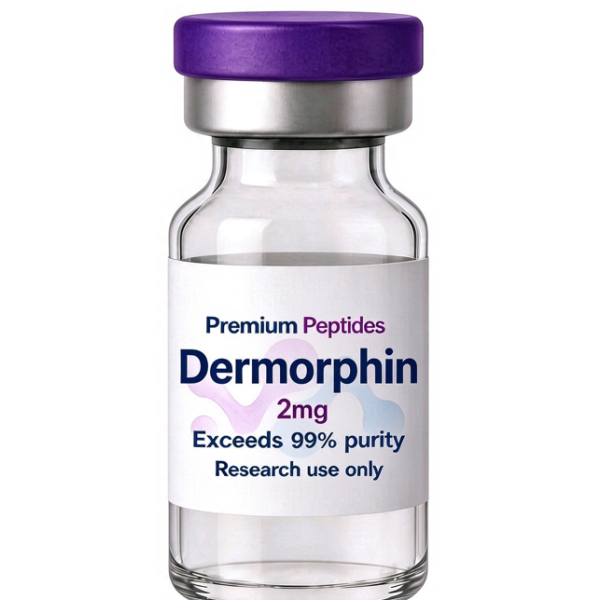
Dermorphin is a natural, highly potent heptapeptide (sequence: H-Tyr-D-Ala-Phe-Gly-Tyr-Pro-Ser-NH2) isolated from the skin secretions of South American waxy monkey tree frogs (Phyllomedusa sauvagei and related species).
Key Characteristics & Potency
• Opioid Receptor Selectivity: It acts as a powerful and selective mu-opioid receptor agonist.
• Potency: It is estimated to be 30 to 40 times more potent than morphine (and significantly higher in specific experimental assays).
• Structural Uniqueness: It contains an unusual D-amino acid (D-alanine) in its second position, which is not part of the standard genetic code and helps protect the peptide from rapid degradation by enzymes.
Origins and History
• Discovery: First identified in the early 1980s by Italian pharmacologists led by Vittorio Erspamer.
• Function in Nature: The frog produces it as a chemical defense mechanism against predators.
• Illicit Use: Dermorphin has gained notoriety outside of medicine for illegal use in horse racing as a performance-enhancing painkiller, allowing horses to mask fatigue and run past natural limits.
Safety and Risks
• Severe Dangers: Because it is a potent mu-opioid agonist, risks include respiratory depression, severe opioid toxicity, physical dependence, and fatal overdose.
• Regulatory Status: It is not an approved human therapeutic medication and is strictly prohibited in sports and racing. Unregulated research-grade vials pose extreme health hazards