


{{ variable.name }} : {{ variable.values[selectedVariantsIndex[variable_index]].name }}
Quantity:
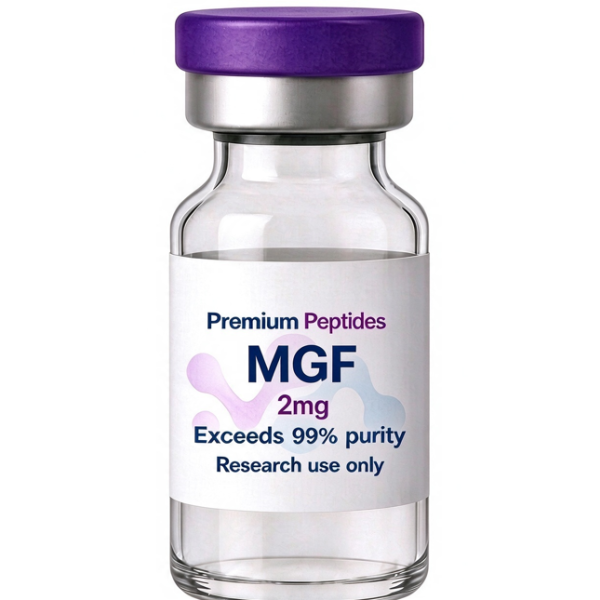
MGF (Mechano Growth Factor, also known as IGF-1Ec) is a 24-amino-acid peptide that acts as a local splice variant of the insulin-like growth factor-1 (IGF-1) gene.
What It Is and How It Works
• Local Response: Unlike systemic IGF-1 produced by the liver, MGF is synthesized locally in skeletal muscle tissue in response to mechanical stress, exercise, or muscle damage.
• Function: It acts as a "first responder" by activating local muscle stem cells (satellite cells) to promote muscle repair, regeneration, and cell fusion.
• PEG-MGF: Standard MGF has a very short half-life in the body. A pegylated version, PEG-MGF, is chemically modified with a polyethylene glycol chain to increase stability and prolong circulation time.
Research Status and Safety
• Not FDA-Approved: MGF and PEG-MGF are not approved by the FDA as medicines and lack controlled human efficacy trials. Most data come from laboratory cell cultures or animal studies.
• Banned in Sports: MGF is strictly prohibited by the World Anti-Doping Agency (WADA) at all times.
• Risks: Because it manipulates growth-factor pathways, theoretical concerns include localized site irritation, abnormal tissue growth signals, and unknown long-term human safety risks.
For topical applications, commercial cosmetic products like the Bueno MGF Peptide Wrinkle Cream Plus utilize recombinant growth factors marketed for skin elasticity and barrier support