


{{ variable.name }} : {{ variable.values[selectedVariantsIndex[variable_index]].name }}
Quantity:
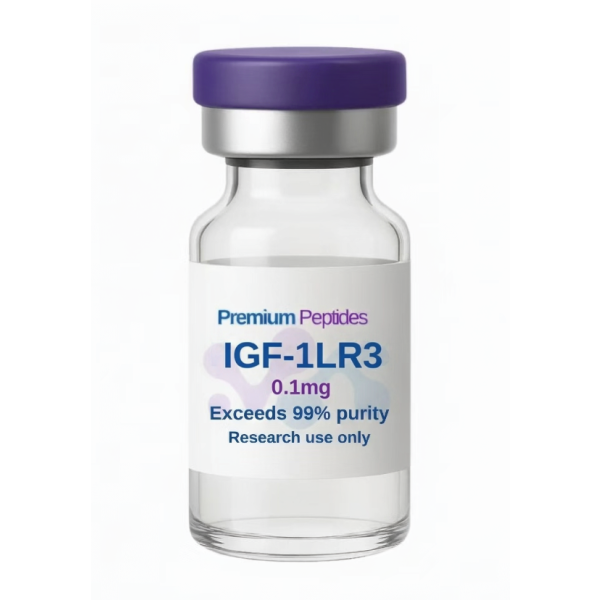
IGF-1 LR3 (Insulin-Like Growth Factor-1 Long R3) is a synthetic, modified analog of natural human IGF-1.
Key Characteristics
• Molecular Modification: It contains 83 amino acids (compared to 70 in natural IGF-1) with an arginine substitution at position 3 and a 13-amino-acid extension at the N-terminus.
• Extended Half-Life: While natural IGF-1 clears from the body in under 20 minutes, IGF-1 LR3 has a half-life of roughly 20 to 30 hours because it binds poorly to native IGF-binding proteins.
• Research Status: It is classified as a research compound and is not FDA-approved for human therapeutic use. It is distinct from the prescription drug mecasermin (Increlex). It is also strictly banned in competitive sports.
Biological Mechanisms
• Muscle Protein Synthesis: It activates the mTOR/PI3K/AKT signaling cascade, which promotes rapid protein synthesis in skeletal muscle.
• Hyperplasia: It stimulates the activation and fusion of satellite cells, potentially contributing to the formation of new muscle fibers rather than just enlarging existing ones.
• Nutrient Partitioning: It mimics insulin-like effects by driving glucose and amino acids into muscle tissue.
Safety and Risks
• Hypoglycemia: Because it influences glucose uptake similarly to insulin, it carries a risk of low blood sugar.
• Uncertain Long-Term Safety: Unsupervised use lacks clinical human safety data, and potent growth-factor activity raises theoretical concerns regarding the growth of abnormal or cancerous cells.