


{{ variable.name }} : {{ variable.values[selectedVariantsIndex[variable_index]].name }}
Quantity:
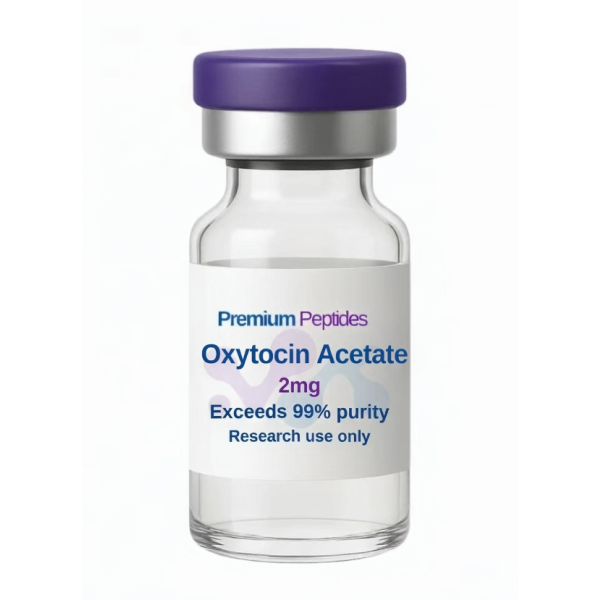
Oxytocin acetate is the acetic acid salt form of oxytocin, a natural 9-amino-acid peptide hormone and neurotransmitter. The acetate salt is commonly used in laboratory research, pharmaceutical manufacturing, and reference standards to improve the stability and solubility of the peptide. Aapptec Peptides +3
Key Characteristics & Functions
• Chemical Identity: Molecular formula of C₄₅H₇₀N₁₂O₁₄S₂ with a molecular weight of 1067.2 g/mol (CAS Number: 6233-83-6). National Institutes of Health (NIH) | (.gov)
• Clinical/Biological Role: Produced in the hypothalamus and released by the posterior pituitary gland, oxytocin stimulates uterine contractions during childbirth, assists with milk let-down during breastfeeding, and acts in the brain to influence social bonding, trust, and stress regulation. MedChemExpress +2
• Research & Commercial Use: While clinical oxytocin is strictly regulated and used under medical supervision for obstetrics, synthetic oxytocin acetate is widely distributed as a research chemical or standard via suppliers like Sigma-Aldrich for cellular and pharmacological studies. Sigma-Aldrich +2
• Safety & Handling: As a potent neurohormone, it requires careful storage (typically frozen at -20°C for powder forms) and proper medical or laboratory protocols. Unsupervised use of peptide formulations outside of clinical guidance carries risks of adverse cardiovascular or uterine responses