


{{ variable.name }} : {{ variable.values[selectedVariantsIndex[variable_index]].name }}
Quantity:
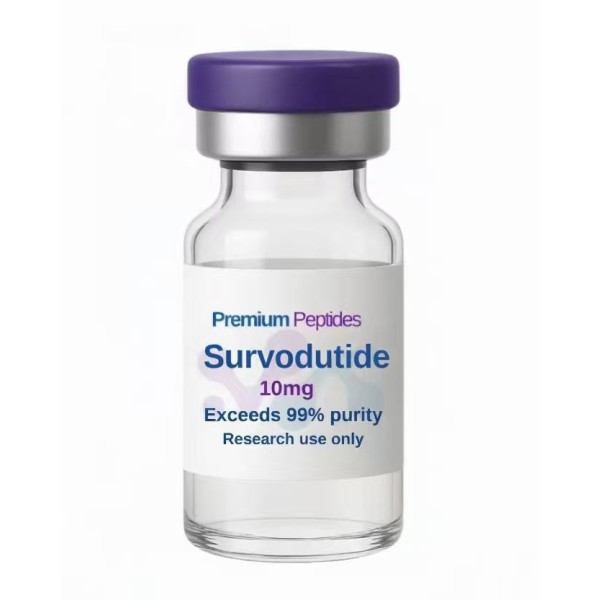
Survodutide is an investigational, once-weekly subcutaneous dual receptor agonist that activates both the glucagon receptor (GCGR) and the glucagon-like peptide-1 (GLP-1) receptor.
What It Is and How It Works
• Structure: It is a 29-amino-acid synthetic peptide derived from the human glucagon sequence, modified with amino acid substitutions to resist degradation and acylated with a C18 fatty acid chain for an extended half-life.
• Dual Mechanism:
• GLP-1 receptor agonism stimulates insulin secretion, slows gastric emptying, and reduces appetite.
• Glucagon receptor agonism increases energy expenditure, promotes thermogenesis, and stimulates direct lipolysis (fat breakdown) in the liver.
• Developers: It was discovered by Zealand Pharma and is developed globally by Boehringer Ingelheim under the development code BI 456906. It is not currently approved for commercial marketing by the FDA or other regulatory authorities.
Clinical Research and Efficacy
• Obesity & Weight Loss: In clinical trials, survodutide has demonstrated significant dose-dependent body weight reductions (reaching up to ~16% to 19% or higher in trial extensions) alongside reductions in visceral and liver fat. It is currently being evaluated in the global SYNCHRONIZE phase 3 clinical trial program.
• Liver Disease (MASH/MASLD): Because glucagon action directly targets hepatic fat metabolism, survodutide has shown strong efficacy in reducing liver fat and addressing metabolic dysfunction-associated steatohepatitis (MASH). It has received Fast Track Designation and Breakthrough Therapy Designation from the U.S. FDA for non-cirrhotic MASH with moderate-to-advanced fibrosis.
• Side Effects: The most common adverse effects are mild-to-moderate, dose-dependent gastrointestinal symptoms, including nausea, vomiting, and diarrhea