



{{ variable.name }} : {{ variable.values[selectedVariantsIndex[variable_index]].name }}
Quantity:
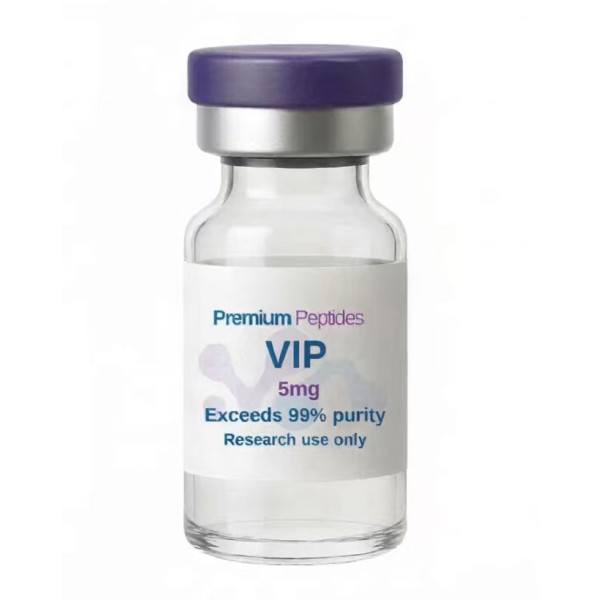
Vasoactive Intestinal Peptide (VIP) is a naturally occurring 28-amino-acid peptide hormone and neuropeptide that acts as a chemical messenger, vasodilator, and immune regulator throughout the body.
What VIP Does
• Gastrointestinal Regulation: VIP relaxes smooth muscle in the lower esophageal sphincter, stomach, and gallbladder. It stimulates water and electrolyte secretion in the intestines while inhibiting gastric acid secretion.
• Cardiovascular Function: It functions as a potent vasodilator, widening blood vessels, improving local blood flow, and helping reduce arterial blood pressure.
• Immune & Anti-Inflammatory Effects: VIP modulates immune responses, suppresses inflammatory cytokine production, and has been studied for its ability to calm autoimmune and inflammatory cascades (such as experimental arthritis).
• Nervous System & Circadian Rhythms: Produced in the brain (including the hypothalamus), it helps regulate neural transmission, circadian rhythms, and provides neuroprotective properties.
Clinical Testing & High Levels (VIPoma)
• Blood Testing: A Vasoactive Intestinal Peptide Test measures VIP levels in the blood. Normal values are typically under 75 pg/mL.
• VIPoma: Abnormally high levels (often 3 to 10 times above normal) are usually associated with a rare neuroendocrine tumor called a VIPoma, which causes severe secretory diarrhea (watery diarrhea), hypokalemia (low potassium), and flushing.
Peptide Therapy & Safety
• Administration Context: In alternative or integrative wellness fields, pharmacy-grade VIP is sometimes compounded (delivered via nasal sprays, subcutaneously, or intravenously) for chronic inflammatory response syndrome (CIRS) or neurological support.
• Side Effects & Risks: Potential side effects include mild headaches, dizziness, facial flushing, nausea, or unwanted blood pressure drops. It is generally contraindicated during pregnancy, breastfeeding, or in people with cardiovascular instability or severe kidney/liver disease.