



{{ variable.name }} : {{ variable.values[selectedVariantsIndex[variable_index]].name }}
Quantity:
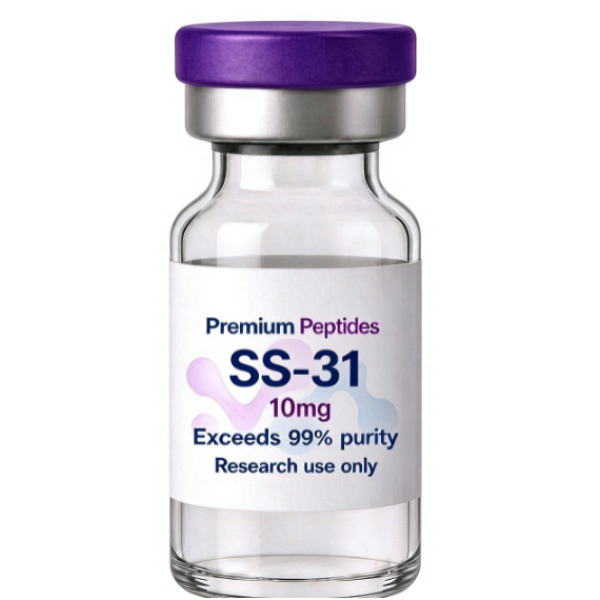
SS-31 (also known as elamipretide, Bendavia, or MTP-131) is a synthetic tetrapeptide (composed of four amino acids: D-Arg-Dmt-Lys-Phe-NH₂) designed to target and protect the mitochondria.
How It Works
• Mitochondrial Target: SS-31 penetrates cell membranes and accumulates specifically in the inner mitochondrial membrane.
• Cardiolipin Stabilization: It binds to cardiolipin, a vital lipid in the inner mitochondrial membrane that acts like structural "rebar". By stabilizing cardiolipin, it prevents membrane collapse and supports efficient ATP (energy) production.
• Antioxidant Action: It acts as a mitochondria-targeted antioxidant, scavenging harmful reactive oxygen species (ROS) and reducing oxidative stress.
Medical Approval & Status
• FDA Approval: In September 2025, the FDA granted accelerated approval to elamipretide (marketed as Forzinity) to improve muscle strength in patients with Barth syndrome weighing at least 30 kg.
• Investigational Uses: Beyond Barth syndrome, SS-31 has been studied in clinical trials and animal models for conditions involving mitochondrial dysfunction, such as primary mitochondrial myopathy, heart failure, and glaucoma, though results for many non-approved indications have been mixed or remain off-label.
• Research Market: Outside of its approved pharmaceutical use for Barth syndrome, SS-31 is widely sold online as a "research peptide" strictly labeled for laboratory or in vitro use rather than general human consumption.
Administration & Side Effects
• Administration: In clinical contexts, it is typically administered subcutaneously.
• Side Effects: Clinical data show it is generally well-tolerated, with mild injection-site reactions (such as redness, itching, pain, or swelling) being the most frequently reported adverse effects.