


{{ variable.name }} : {{ variable.values[selectedVariantsIndex[variable_index]].name }}
Quantidade:
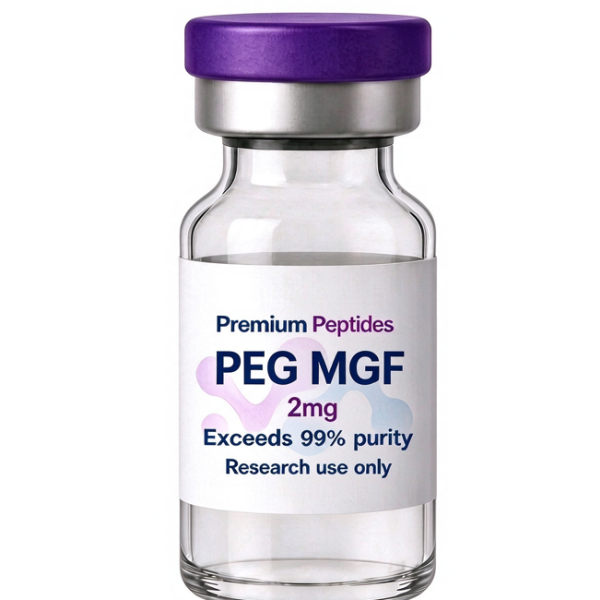
PEG-MGF (PEGylated mechano growth factor) is a synthetic, modified variant of mechano growth factor, which is a local splice variant of Insulin-like Growth Factor-1 (IGF-1) produced in skeletal muscle tissue in response to mechanical stress, exercise, or injury.
By attaching a polyethylene glycol (PEG) chain to the molecule (pegylation), scientists extend its circulating half-life from just a few minutes (for native MGF) to several days, preventing rapid breakdown by enzymes.
Key Mechanisms & Effects
• Satellite Cell Activation: PEG-MGF activates and promotes the proliferation of muscle satellite (stem) cells (Pax7+), aiding in the repair and regeneration of damaged muscle fibers.
• Anabolic Signaling: It acts via IGF-1 receptor pathways to support local tissue recovery, protein synthesis, and angiogenesis (formation of new blood vessels) in muscle.
• Extended Half-Life: Unlike natural MGF—which acts locally and degrades almost immediately—PEG-MGF remains active in the system longer due to its PEG shield.
• Not FDA Approved: PEG-MGF is not approved by the U.S. Food and Drug Administration (FDA) for human clinical use or as a therapeutic medicine.
• Research-Grade Compound: It is classified strictly as a research chemical.
• Prohibited in Sports: PEG-MGF is banned by anti-doping agencies and prohibited in competitive athletics.
• Risks: Because long-acting growth-factor analogs lack rigorous human safety data, unsupervised use carries risks related to purity, sterility, dose accuracy, and untargeted cell growth or metabolic effects.