


{{ variable.name }} : {{ variable.values[selectedVariantsIndex[variable_index]].name }}
Quantidade:
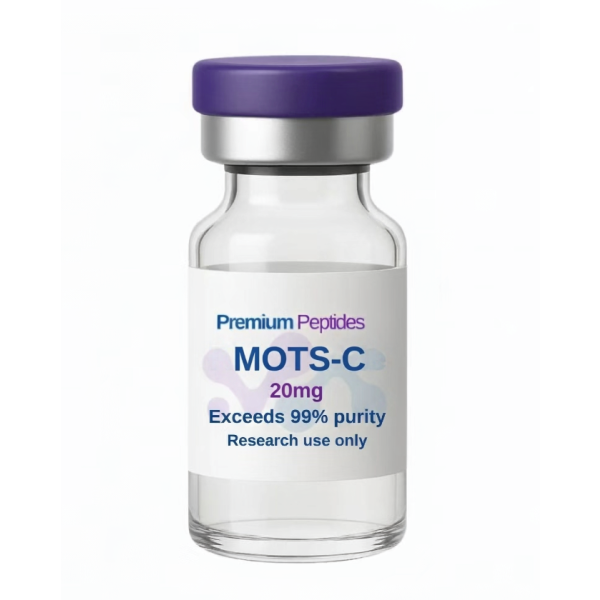
MOTS-c (Mitochondrial Open Reading Frame of the 12S rRNA Type-C) is a 16-amino-acid peptide encoded within the mitochondrial genome rather than nuclear DNA.
What MOTS-c Does
• Energy Sensor Activation: It activates AMPK (AMP-activated protein kinase), acting as a cellular "fuel gauge" that signals the body to handle glucose and fats more efficiently.
• Exercise Mimetic: It mimics some metabolic effects of physical exercise by promoting glucose uptake in skeletal muscle and supporting mitochondrial biogenesis.
• Stress Response: Under metabolic stress, it can translocate from the mitochondria into the cell nucleus to help regulate gene expression and cellular homeostasis.
• Aging and Decline: Natural levels of MOTS-c decline as people age, which has drawn interest in longevity and anti-aging research.
• Reported Risks: Because it is largely untested in humans, potential side effects and risks include injection-site reactions (pain, redness, swelling), insomnia, heart palpitations, fever, and immune system responses.