


{{ variable.name }} : {{ variable.values[selectedVariantsIndex[variable_index]].name }}
Quantidade:
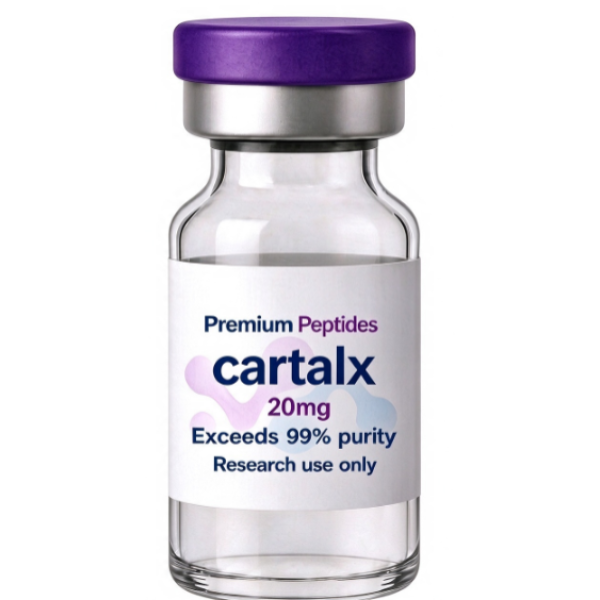
Cartalax is a synthetic short bioregulatory peptide (tripeptide) with the amino acid sequence Alanine-Glutamic Acid-Aspartic Acid (AED). It belongs to a class of organ-specific cytomedines or Russian-origin peptide bioregulators designed to target joint and cartilage tissue.
What It Is & How It Works
• Sequence: Alanine-Glutamic Acid-Aspartic Acid (AED), structurally modeled after parts of type XI collagen.
• Mechanism: It is proposed to interact with cell nuclei and influence gene expression patterns in chondrocytes (cartilage-forming cells), aiming to support extracellular matrix protein synthesis and balance cartilage homeostasis rather than forcing aggressive tissue growth.
• Intended Use (in research contexts): Studied for joint support, musculoskeletal resilience, and modulating age-related tissue decline.
• Evidence Limitations: Most available data come from preclinical, in vitro, or small Eastern European observational studies. Large-scale, randomized human clinical trials demonstrating safety and efficacy are lacking.
• Risks: Unproven compounds carry risks regarding purity, sterility, and unknown long-term biological effects, including theoretical concerns related to cell signaling or senescence pathways.